
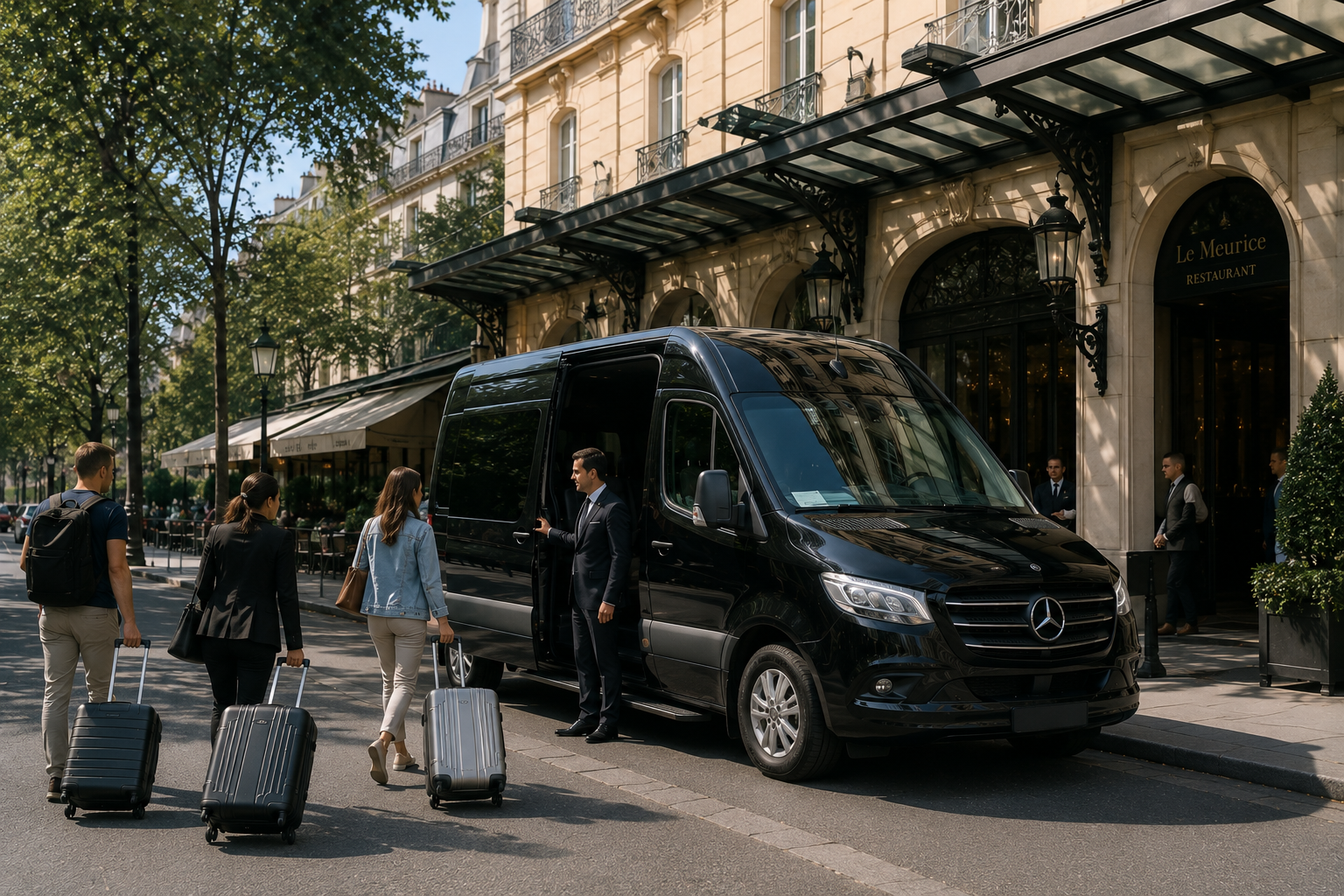
Travelling across Europe with luggage requires more planning than simply packing a suitcase. Travel With Luggage Europe can involve flights, trains, private transfers, coaches, hotels, city centres, ferries and multiple border crossings. The right luggage strategy can make these connections easier, especially when an itinerary covers several destinations.
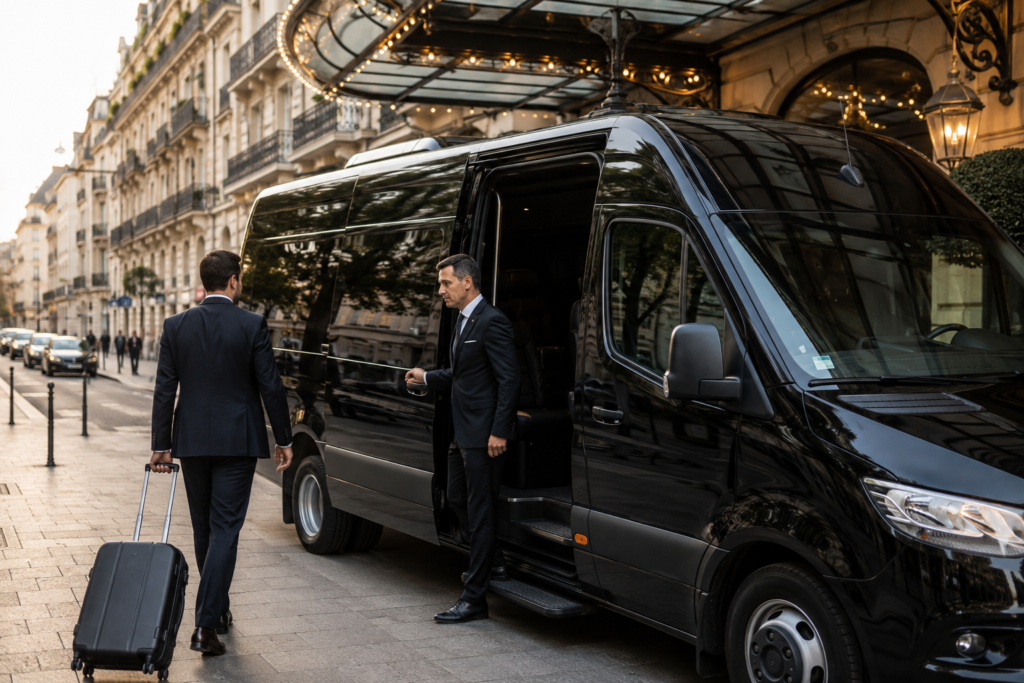
For leisure travellers, families and small groups, luggage planning helps avoid unnecessary carrying, storage problems and rushed transfers. For travel agents, tour operators, DMCs and MICE planners, it is also an important part of transportation planning because luggage volume can influence vehicle selection, pickup arrangements and travel times.
Europe has extensive rail and road networks, but luggage conditions can vary depending on the transportation method and operator. EU passenger-rights guidance covers air, rail, bus and coach travel, while individual transport providers may have their own luggage conditions.
This guide explains how to Travel With Luggage Europe more efficiently, from choosing the right suitcase to planning airport transfers, train journeys, hotel access and private group transportation.
Quick Answer: How Can You Travel With Luggage in Europe?
The easiest way to Travel With Luggage Europe is to keep luggage manageable, check the specific baggage rules for every transport provider, allow extra transfer time and select transportation according to both passenger numbers and luggage volume.
For multi-city journeys, travellers should consider:
- Number and size of suitcases
- Carry-on luggage
- Train baggage conditions
- Airline baggage allowances
- Coach or vehicle luggage capacity
- Hotel access
- Airport transfer arrangements
- Walking distances between stations and hotels
- Mobility requirements
- Storage arrangements during sightseeing
For groups, luggage planning should be completed before the vehicle is confirmed.
Why Luggage Planning Matters When Travelling in Europe
A suitcase that is manageable at an airport can become inconvenient when the same traveller has to move it through a railway station, onto a train, across a cobbled historic centre and into a hotel.
This is particularly important for itineraries such as:
Paris → Brussels → Amsterdam → Cologne → Frankfurt → Zurich
A traveller may use several different forms of transportation during one journey.
Each change creates another luggage-handling point.
When you Travel With Luggage Europe, think about the complete route rather than each individual transportation segment.
For example:
| Travel Situation | Main Luggage Consideration |
|---|---|
| Airport arrival | Baggage collection and group meeting point |
| Train journey | Carry-on space and boarding time |
| Private transfer | Vehicle luggage capacity |
| Coach journey | Suitcase storage and loading |
| Hotel arrival | Distance from vehicle to entrance |
| City sightseeing | Whether luggage can remain securely stored |
| Multi-city itinerary | Frequency of packing and unpacking |
Travel With Luggage Europe: Choose the Right Type of Bag
The best luggage depends on the itinerary.
Hard-Shell Suitcase
A hard-shell suitcase can provide protection for belongings and is useful for longer holidays where travellers carry several outfits and personal items.
However, large hard-shell cases can be inconvenient on stairs, narrow platforms and busy railway stations.
Soft-Sided Suitcase
Soft luggage can be easier to fit into certain storage spaces and may provide additional flexibility when packing.
It can be particularly practical for travellers moving between several hotels.
Carry-On Bag
A compact carry-on is useful for keeping essential items accessible during transportation.
Important items such as medication, travel documents, electronics, chargers and one change of clothes should generally remain accessible rather than being placed in checked luggage.
Backpack or Personal Bag
A smaller personal bag can make short walks between stations, hotels and meeting points easier.
For travellers using trains frequently, a compact personal bag can also reduce the need to handle the main suitcase repeatedly.
How Much Luggage Should You Take to Europe?
There is no single luggage quantity that works for every European trip.
A two-week multi-country itinerary may require more clothing than a short city break, but carrying more luggage also makes transportation more complicated.
A practical approach is to consider:
- Trip duration
- Weather
- Number of destinations
- Number of hotel changes
- Laundry availability
- Formal clothing requirements
- Sports or specialist equipment
- Children travelling in the group
- Mobility equipment
- Airline baggage allowance
For Travel With Luggage Europe, the goal should not necessarily be to pack the least amount possible. Instead, pack according to the actual transportation and accommodation plan.
Travelling With Luggage on European Trains
Rail travel is one of the most useful ways to move between major European cities.
However, luggage arrangements differ between railway operators and services.
EU rail passenger-rights guidance states that passengers may take luggage that can be easily handled on board, while larger or bulky items can be subject to the railway operator’s conditions of carriage. Operators also provide information about procedures for lost luggage.
Before a train journey, check:
- The operator’s luggage conditions.
- Whether large or bulky luggage has specific requirements.
- Where luggage can be stored.
- The station platform and departure information.
- Whether the train requires a change.
- How much time is available for boarding.
- Whether assistance is required.
Allow Extra Time at Major Stations
Large European railway stations can be busy and unfamiliar.
If a group has several suitcases, reaching the correct platform may take longer than travelling with a small backpack.
For group travel, the tour leader should know:
- Train number
- Departure time
- Platform information when available
- Coach or carriage information
- Passenger count
- Luggage count
- Meeting point
The EU also requires railway operators to provide certain information about services, accessibility and procedures for lost luggage.
Travel With Luggage Europe by Private Vehicle
Private transportation can simplify luggage management, particularly for families and groups travelling between several destinations.
Instead of repeatedly carrying suitcases between public transport connections, passengers can have luggage transported with the group between planned pickup and drop-off points.
Possible options include:
- Executive sedan
- Mercedes-Benz V-Class
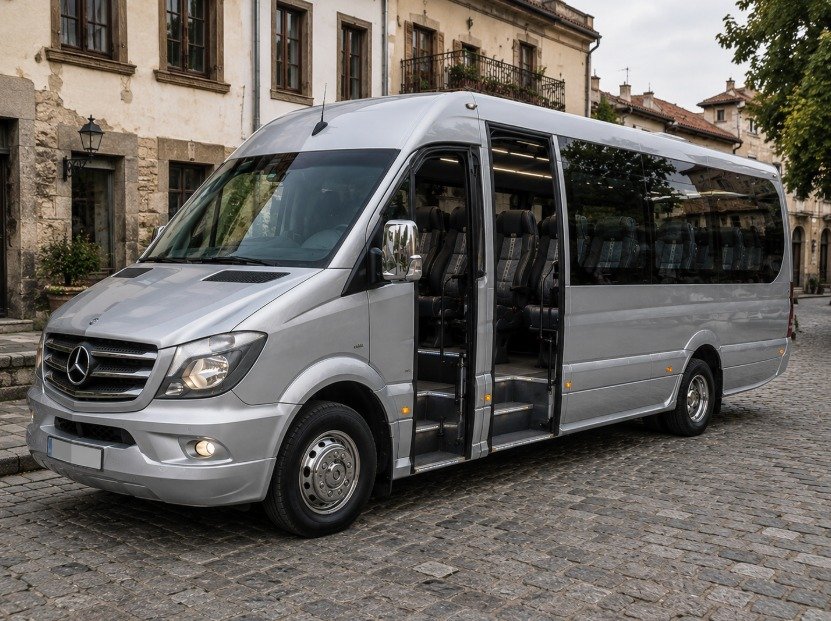
- Mercedes Sprinter
- Minibus
- Private coach
Tour Passion’s European transportation services include vehicles ranging from sedans and V-Class vehicles to Sprinter configurations and larger coaches. Exact vehicle selection depends on destination, date, group size, itinerary and luggage requirements.
Passenger Count Is Not the Only Factor
This is one of the most important rules when planning Travel With Luggage Europe.
A vehicle can have enough seats but insufficient practical luggage capacity.
For example, Tour Passion publishes a European itinerary with different vehicle configurations and corresponding luggage capacities, illustrating why passenger numbers and luggage quantities need to be assessed together.
For a quotation, provide:
- Number of passengers
- Number of large suitcases
- Number of carry-ons
- Oversized luggage
- Sports equipment
- Wheelchairs or mobility equipment
- Number of hotel stops
- Complete itinerary
This gives the transportation provider better information for vehicle selection.
Travel With Luggage Europe for Group Tours
Luggage becomes particularly important when travelling with a group.
Imagine a group of 18 travellers carrying one large suitcase and one carry-on each.
The passenger count alone does not fully describe the transportation requirement.
The group may need:
- Appropriate luggage storage
- Efficient loading and unloading
- A suitable pickup point
- Sufficient time at airports
- Hotel access planning
- Driver coordination
- Clear luggage identification
For larger groups, a private coach can keep passengers and luggage within one coordinated transportation operation.
Tour Passion’s European coach services are designed for group transportation, including airport transfers, intercity journeys and multi-destination itineraries.
Airport Transfers With Luggage
Airport transfers are one of the most important stages of Travel With Luggage Europe.
After a long flight, travellers may have several suitcases and may not know the local airport layout.
For group airport transfers, confirm:
- Airport and terminal
- Flight number
- Arrival time
- Passenger count
- Number of suitcases
- Meeting point
- Hotel destination
- Vehicle type
- Contact person
- Special assistance requirements
Flight delays can also affect the pickup schedule, so the transportation plan should include a suitable contingency process.
Tour Passion’s airport transportation information specifically highlights passenger numbers, luggage volume, terminal information, hotel location and meeting arrangements as important planning considerations for group airport transfers.
Hotel Transfers and Luggage Access
The hotel itself is only one part of the arrival process.
The vehicle must also be able to reach a suitable passenger drop-off point.
Historic European destinations can have:
- Narrow streets
- Pedestrian areas
- Restricted vehicle access
- Limited coach parking
- Temporary road restrictions
When you Travel With Luggage Europe, check whether passengers will need to walk from the vehicle to the hotel.
For a large group with luggage, even a short walk can become operationally significant.
Travel agents and tour operators should therefore confirm hotel access before finalising transportation arrangements.
What About Luggage During Sightseeing?
One of the most useful strategies is to avoid carrying full luggage during sightseeing whenever possible.
For example:
Airport → Hotel → Sightseeing → Hotel → Next City
is usually easier to manage than:
Airport → Sightseeing → Train Station → Hotel
with every suitcase travelling with the group.
If luggage needs to remain in a vehicle, confirm the transportation provider’s arrangements and never assume that luggage storage is automatically available or unattended luggage will be secure.
Where appropriate, luggage storage at hotels or stations may be another option, subject to the provider’s rules.
Travel With Luggage Europe During Multi-City Trips
Multi-city trips involve frequent packing and unpacking.
A simple luggage strategy can make a major difference.
Use a Consistent Packing System
Keep frequently used items in the same section of the suitcase.
For example:
- Clothing
- Toiletries
- Electronics
- Documents
- Shoes
- Laundry
This reduces the time required to repack.
Keep Important Items Accessible
Passports, wallets, medication, travel documents and electronics should remain accessible.
Label Every Bag
A luggage tag should contain enough information to identify the traveller or group without unnecessarily exposing sensitive personal information.
For groups, a simple visual luggage identifier can also help the tour leader recognise bags quickly.
Air Travel and European Luggage Rules
Airline baggage allowances are not identical across carriers or ticket types.
Before flying, verify:
- Checked baggage allowance
- Cabin baggage allowance
- Weight restrictions
- Size restrictions
- Special equipment rules
- Sports equipment policies
- Fees for additional baggage
The EU’s official travel guidance also recommends checking what is permitted in hand luggage and checked baggage, including restrictions on certain products.
Passenger rights can also apply when luggage is lost, damaged or delayed, although the applicable rules depend on the transport mode and circumstances.
Luggage Tips for Families Travelling in Europe
Families often have additional luggage requirements.
Children may require:
- Extra clothing
- Baby equipment
- Strollers
- Car seats
- Snacks
- Medicines
- Entertainment
Before booking transportation, tell the provider about any bulky child equipment.
A family travelling with several children may need more practical luggage capacity than the number of passengers initially suggests.
Luggage and Accessibility
Travellers with reduced mobility may have additional requirements for mobility equipment.
EU passenger-rights rules provide protections and assistance for passengers with disabilities or reduced mobility across air, rail, bus, coach and maritime travel, subject to the relevant rules for each transport mode.
For a group itinerary, communicate these requirements before transportation is confirmed.
Useful information includes:
- Wheelchair dimensions
- Foldable or non-foldable equipment
- Number of mobility aids
- Assistance required at airports
- Assistance required at stations
- Vehicle access requirements
Providing this information early gives the transportation provider an opportunity to assess the appropriate arrangement.
Travel With Luggage Europe: Train vs Coach vs Private Vehicle
| Travel Option | Luggage Planning | Best For |
|---|---|---|
| Train | Check operator rules and storage arrangements | Major city-to-city travel |
| Private car | Limited by vehicle configuration | Individuals and couples |
| Luxury van | Requires luggage-capacity check | Families and small groups |
| Sprinter | Capacity depends on configuration and luggage volume | Small and mid-sized groups |
| Private coach | Designed for larger group movements | Large groups and multi-city tours |
No single transportation method is best for every itinerary.
A hybrid approach can often work well.
For example, a group might use rail between major city centres and private transportation for airport transfers, hotels, sightseeing and destinations where direct rail connections are less convenient.
B2B Luggage Planning for Travel Agents and Tour Operators
For travel professionals, luggage information should become part of the quotation request.
A useful transportation request can include:
| Information | Why It Matters |
|---|---|
| Passenger count | Determines basic vehicle requirement |
| Large suitcases | Affects luggage capacity |
| Carry-ons | Adds additional storage requirements |
| Oversized items | May require special planning |
| Mobility equipment | Affects accessibility requirements |
| Arrival airport | Determines pickup logistics |
| Hotel list | Helps assess vehicle access |
| Multi-city route | Determines operational requirements |
| Travel dates | Vehicle availability |
| Sightseeing schedule | Helps calculate realistic timing |
This approach is particularly useful for DMCs, tour operators and agencies arranging multi-country programs.
Instead of requesting only a vehicle for “20 passengers,” provide the complete luggage profile and itinerary.
Common Luggage Mistakes in European Travel
Packing more than the itinerary requires
Multiple hotel changes make heavy luggage increasingly inconvenient.
Ignoring luggage rules on trains
Rail operators can have specific conditions for larger or bulky luggage.
Choosing a vehicle by seats alone
Passenger capacity does not automatically represent luggage capacity.
Leaving luggage planning until arrival
Airport and hotel transfers should be organised before the group reaches Europe.
Forgetting special equipment
Wheelchairs, sports equipment, strollers and other bulky items should be declared before transportation is confirmed.
Scheduling transfers too tightly
Loading and unloading luggage takes time, especially for larger groups.
A Practical Travel With Luggage Europe Checklist
Before departure, check:
- Airline baggage allowance
- Train operator luggage conditions
- Number of large suitcases
- Number of carry-ons
- Special or oversized luggage
- Mobility equipment
- Airport meeting point
- Hotel access
- Vehicle luggage capacity
- Train connections
- Sufficient transfer time
- Luggage labels
- Essential items in carry-on luggage
- Emergency transportation contact
This checklist is especially useful for multi-city European itineraries.
How Tour Passion Can Help With Luggage-Focused European Travel
Tour Passion provides European ground transportation for individual travellers, families, groups, travel professionals and multi-city itineraries.
Relevant services include:
- Airport transfers
- Hotel transfers
- Chauffeur services
- Mercedes-Benz V-Class transportation
- Mercedes Sprinter transportation
- Private coaches
- Multi-city group transportation
- Corporate and MICE transportation
The appropriate vehicle depends on the destination, travel date, passenger numbers, luggage requirements and itinerary. These details should therefore be included when requesting a quotation.
For travel agents and tour operators, providing the complete passenger and luggage profile can make transportation planning more precise.
Plan Your European Trip With the Luggage in Mind
The simplest way to Travel With Luggage Europe is to plan luggage at the same time as transportation rather than treating it as a separate issue.
For an individual traveller, that may mean choosing a practical suitcase and checking airline and railway conditions.
For a family, it may mean arranging an appropriate airport transfer.
For a large group, it means matching the vehicle to both passenger numbers and luggage volume.
For a tour operator or DMC, it means including luggage requirements in the transportation brief from the beginning.
European travel becomes easier to coordinate when every stage of the itinerary considers how passengers and their belongings will move between airports, stations, hotels and destinations.
Get in Touch & Book Now
Planning a European trip with multiple passengers and luggage?
Tour Passion can help travel professionals and travellers discuss:
- Group size
- Luggage volume
- Travel dates
- European destinations
- Airport transfers
- Hotel transfers
- Multi-city transportation
- Vehicle requirements
Get in Touch & Book Now to discuss your European transportation requirements.
FAQs About Travel With Luggage Europe
What is the best way to travel with luggage in Europe?
The best option depends on the itinerary. Trains can be practical between major cities, while private cars, vans, Sprinters and coaches can simplify airport, hotel and multi-city transportation. Always check the luggage conditions of the specific transport provider.
Can I take large luggage on European trains?
Generally, passengers can take luggage that they can reasonably handle, while larger or bulky items may be subject to the railway operator’s conditions. Check the specific operator before travelling.
Is a private coach suitable for travellers with luggage?
A private coach can be useful for groups because passengers and luggage can travel together between planned pickup and drop-off points. The exact vehicle should be selected according to passenger numbers, luggage volume and itinerary.
How should travel agents plan luggage for a group?
Travel agents should provide passenger numbers, large suitcase quantities, carry-ons, special equipment, airport details, hotel locations and the complete itinerary when requesting transportation.
Should I use a train or private vehicle when travelling around Europe with luggage?
Both can be useful. Trains work well on many major city-to-city routes, while private vehicles can offer door-to-door flexibility for airports, hotels, sightseeing and multi-stop itineraries.
What should I do if my luggage is lost during European travel?
The correct procedure depends on the transportation method. Contact the airline, railway operator, coach company or other transport provider and follow its baggage-claim procedure. EU passenger-rights information provides guidance for different transport modes.
Do luggage requirements affect vehicle selection?
Yes. Passenger numbers alone do not always determine the appropriate vehicle. Luggage quantity, size, special equipment and the itinerary should also be considered before confirming transportation.
Can Tour Passion arrange European transportation for groups with luggage?
Tour Passion provides airport transfers, chauffeur services, Mercedes Sprinter transportation, private coaches and multi-city European transportation. Vehicle selection is subject to destination, date, group size, luggage requirements and availability.
Suggested For You
Multi-Country Europe Tour Package – 11 Days
Switzerland France Tour Package – 12 Days
Luxury Transfer Services in Europe
Recommended Europe Travel Services
Paris coach hire ,
Paris chauffeur service ,
Schiphol airport transfers ,
Amsterdam airport taxi ,
Paris airport transfer ,
Europe coach rental ,
Barcelona airport transfers ,
Barcelona transportation ,
Luxury Europe travel ,
Interlaken transfers ,
Davos transfers